Ask a Scottish caddie for the best month to play and most will say September, with late May a close second. The turf is firm, the light sits low over the fairways, and the tee sheets have room to breathe. That said, every season here has a case
Ask a Scottish caddie for the best month to play and most will say September, with late May a close second. The turf is firm, the light sits low over the fairways, and the tee sheets have room to breathe. That said, every season here has a case to make. It depends on what you want from the trip.
Scotland’s weather does as it pleases, but the golfing year follows a reliable enough rhythm. Knowing when the links run fastest, when the evenings stretch to ten o’clock and when the famous courses go quiet is the difference between a decent trip and a great one. Here is how the year unfolds.
Spring: April and May — fresh fairways and lengthening light
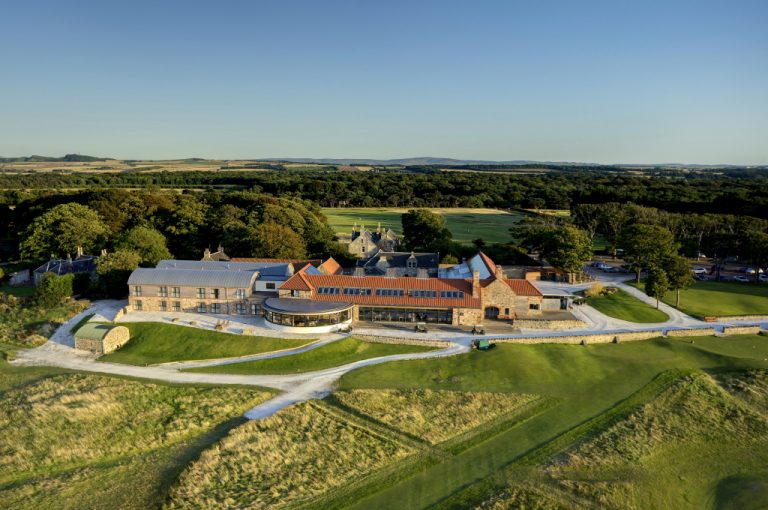
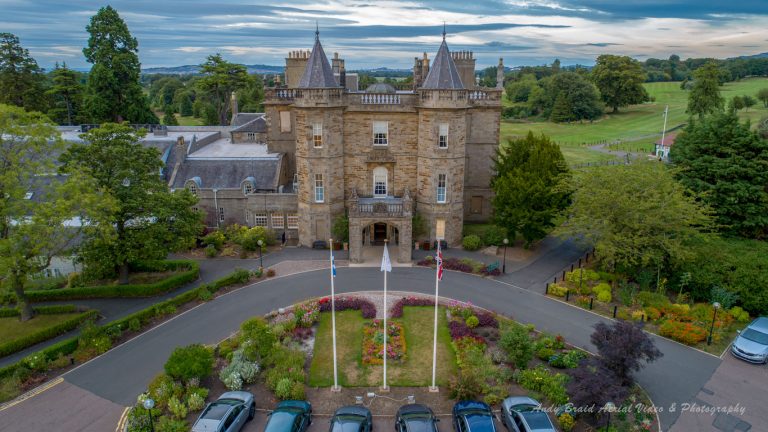
April can still bite. Winter greens linger on some inland courses into the early weeks, and you should pack for four seasons in a day. By May the picture changes. It is drier than the months either side, the links firm up nicely, and the gorse turns the coastline yellow. Given the choice, we would take late May over April every time. East Lothian, Scotland’s sunniest golfing county, is the place to start, and The Lodge at Craigielaw, from
Spring is also the kindest window for the tee times that matter. The summer rush has not arrived and the big hotels feel unhurried, so a hand-built break booked now, built around your dates, tends to land exactly the courses you ask for. For golfers who want the links close to their best without the high-season traffic, late May is hard to better.
Summer: June to August — long days and the home of golf at its peak
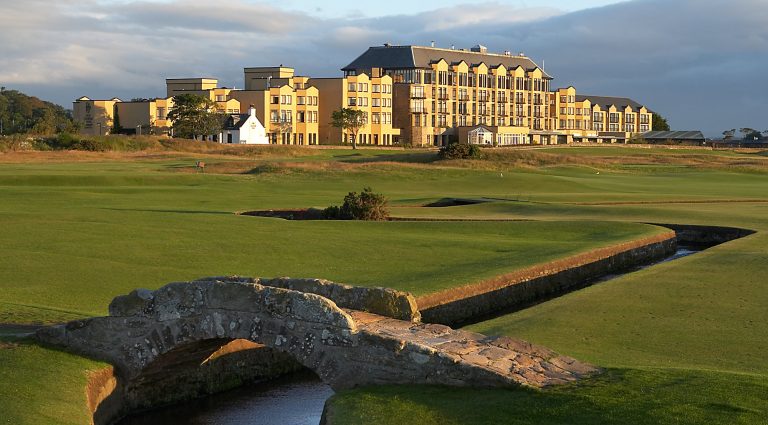
Around the June solstice, daylight lasts past ten in the evening, which makes a thirty-six-hole day genuinely practical. Play in the morning, have a proper lunch, then go out again after dinner. The fairways are firm and running, and every big venue is in its best condition of the year. St Andrews is the obvious pilgrimage. The Old Course Hotel Golf Resort & Spa, from
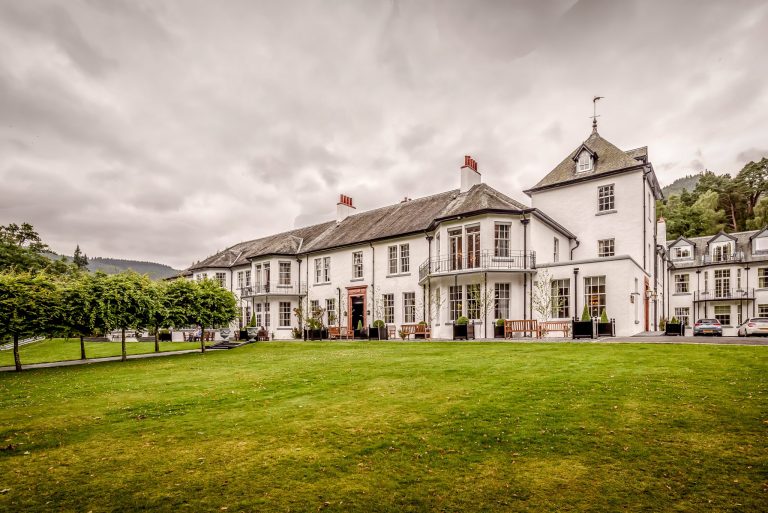
The trade-off is obvious once you are there: summer is the busiest season, and the most sought-after tee sheets fill months ahead, so this is not a trip to leave until spring to arrange. If the coast is full, head inland. The Gleneagles Hotel, from
Where our specialists would stay in Scotland
Autumn: September and October — firm turf, amber light, fewer crowds
September is our pick of the entire year. The crowds recede, the turf stays fast, and the low autumn light suits links golf better than any other month. Ayrshire is especially good now. Trump Turnberry, from
Into October the days shorten and the first real North Sea weather can roll in, so plan your golf for the middle of the day rather than banking on a late second round. The rewards are quiet tee sheets and easier access to celebrated names. Dalmahoy Hotel and Country Club, from
Winter: November to March — atmosphere, solitude and the golfer's retreat
Scotland’s golfing year never fully closes. The true links rarely freeze for long, the sea keeping them a degree or two milder than inland courses, and many stay open right through the winter. Expect winter greens on some, daylight at a premium and a wind that means business. What you gain is solitude. There is real satisfaction in having a famous links almost entirely to yourself on a bright January morning.
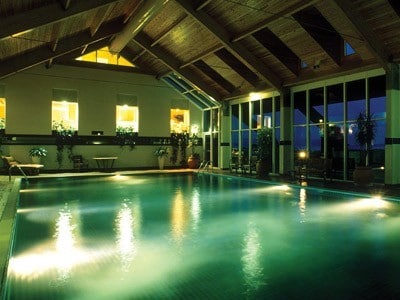
Build a winter trip around a hotel that turns the cold into part of the appeal. Gleneagles and the Old Course Hotel both reward the off-season golfer with serious spas and fireside evenings, while the Mercure Edinburgh Princes Street Hotel, from
Our specialists’ favourite stays in Scotland
What our golfers say
4.997 reviews
Hi Chris, glad all went well in Le Touquet. Here's to Fuerteventura and beyond! Simon and the team at Golf Planet Holidays
Thanks Martin, glad you enjoyed your golf around Fuengirola
We have just returned from a trip to the Western Cape and the Kruger, that will be remembered for many years. We played Stellenbosch, De Zalze and Paarl – all of which were in superb condition – along with Erinvale. We then moved on to …
What a golf break here costs by month, GB
| 0.88 | 0.88 | 0.89 | 1.00 | 1.06 | 1.07 | 1.07 | 1.03 | 1.03 | 0.98 | 0.88 | 0.88 |
| Jan | Feb | Mar | Apr | May | Jun | Jul | Aug | Sep | Oct | Nov | Dec |
|---|
Frequently asked questions
What is the warmest, driest month to play golf in Scotland?
May and June are typically the driest months, while July offers the most reliable warmth. Many specialists favour late May and September as the ideal balance — pleasant temperatures, firm fairways and far fewer crowds than midsummer. East Lothian, around Greywalls Hotel & Chez Roux, enjoys some of the country’s sunniest, driest golfing weather.
How far in advance should I book a Scottish golf trip?
For summer rounds at marquee venues such as the Old Course Hotel Golf Resort & Spa or Fairmont St Andrews Hotel, we recommend booking several months ahead — often a year for the very best dates. Spring and autumn allow shorter lead times. Because your money is held in trust with PTS until you travel, securing dates early carries no risk to your funds.
Are Scottish courses playable in poor weather?
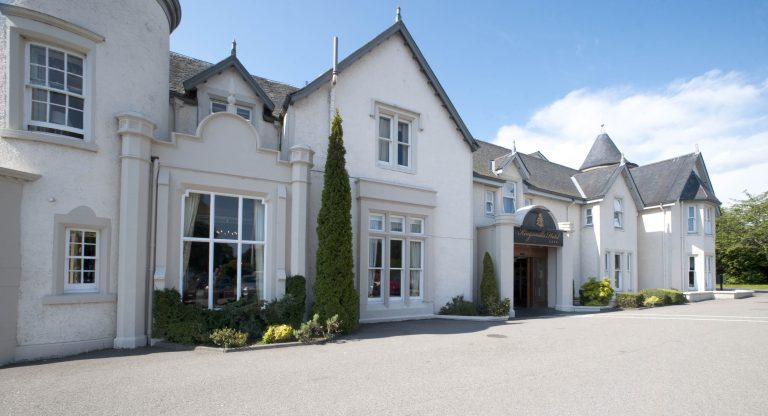
Largely, yes. The classic links are designed for wind and weather and drain exceptionally well, so play continues in conditions that would close inland courses elsewhere. A flexible itinerary and a well-placed base — Kingsmills Hotel in Inverness, or The Gleneagles Hotel in Perthshire — let you adapt your rounds comfortably around the day’s conditions.
Is summer the only good time, given the daylight?
Not at all. While June’s near-midnight light is a unique draw, autumn rivals it for course condition and surpasses it for peace and access. September delivers firm turf, golden light and quiet tee sheets across St Andrews, East Lothian and Perthshire — which is why so many discerning golfers return at that time of year.
Come and play with us
Wherever you're travelling from, you're welcome on a Golf Planet hosted tour — a small group, a host with you from the first tee to the last, and every round, transfer and dinner taken care of. You just bring the clubs.