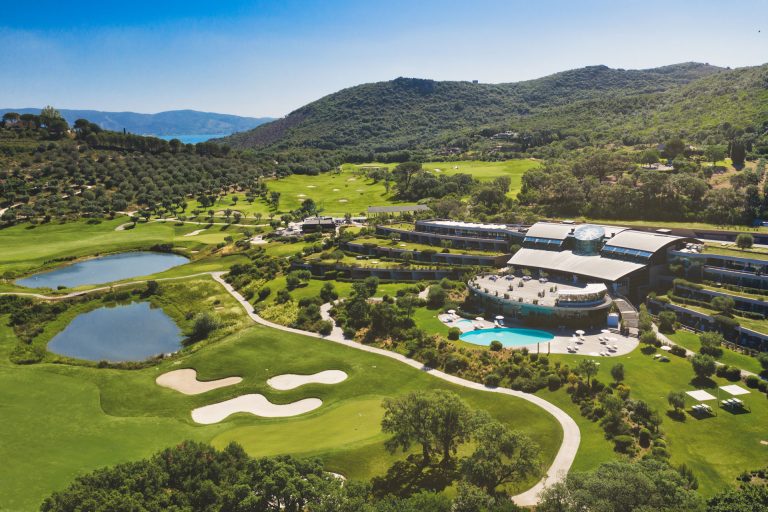
Italy's only PGA National course, an hour south of Florence.
Tuscany golf holidays
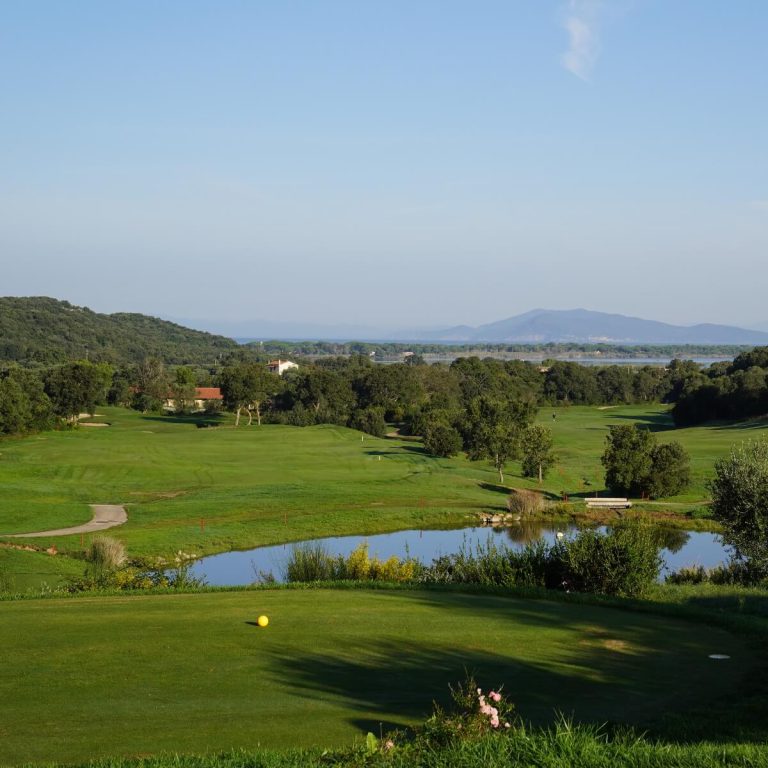
Argentario is the home of the PGA in Italy, sea air off the Feniglia reserve and a Baldovino Dassù layout that asks proper questions. Pair it with Poggio dei Medici, a Ladies Italian Open host in the Mugello hills, and the wine and the Chianti light come free.
★★★★★4.9 from real golfers
· 4 courses · from £495pp (≈ €585) (≈ $655) (≈ CA$925) (≈ AU$945) (≈ NZ$1,155) (≈ CHF 545) (≈ kr 6,215) (≈ kr 6,555) (≈ kr 4,395) · ATOL-protected where flights are added
Golf holidays in Tuscany start from £495 (≈ €585) (≈ $655) (≈ CA$925) (≈ AU$945) (≈ NZ$1,155) (≈ CHF 545) (≈ kr 6,215) (≈ kr 6,555) (≈ kr 4,395) per person, across 4 courses we can book, 2 hotels and resorts we sell. Sold ground-only, hand-priced around your dates, and arranged by us since 1981.
A hand-priced quote, no obligation, and no call centre.
Two golf resorts anchor a Tuscany trip: La Bagnaia near Siena and Argentario down on the coast at Porto Ercole. Both keep their own 18-hole course on site, so you can wake up, walk to the first tee and be back for lunch without a transfer. That makes Tuscany an easy region for a UK golfer who wants the rounds and the food and wine in equal measure.
We are Golf Planet Holidays, and we have been putting together tailored golf trips since 1981. We plan the hotel, book the tee times, sort the transfers and check every round before you travel, so the bit you do is play.
Why play golf in Tuscany
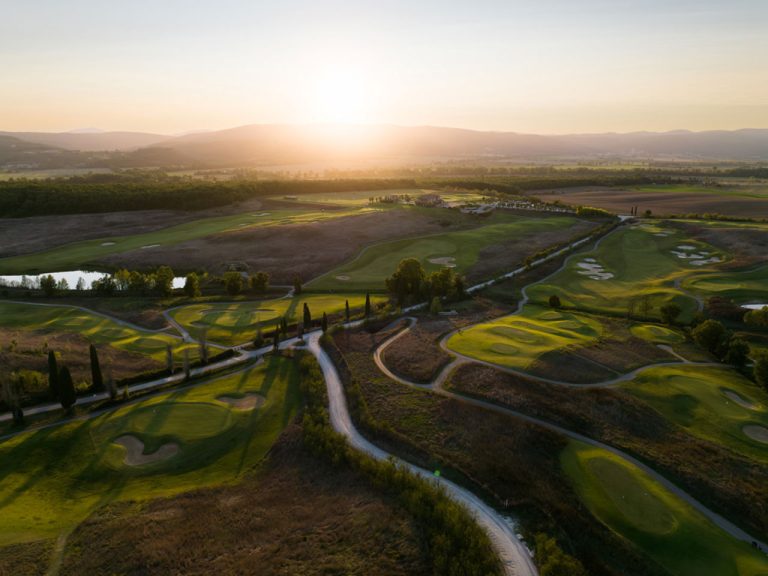
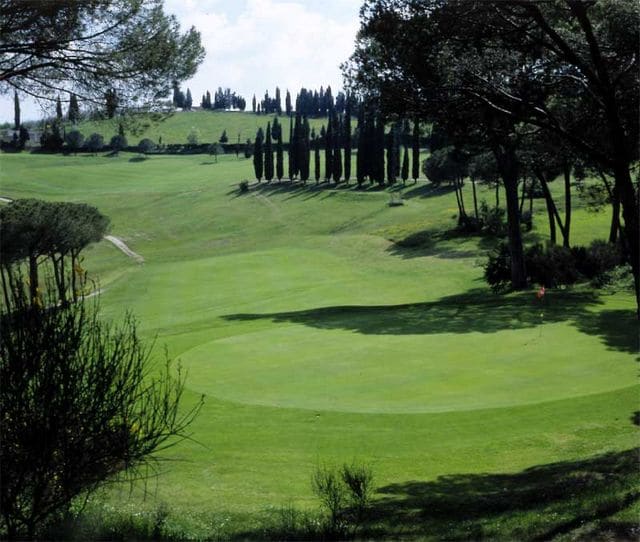
The golf here is resort golf in the best sense: two well-kept courses set in proper Tuscan countryside, each attached to a hotel with a spa and a kitchen worth staying in for. Royal Golf La Bagnaia, the Robert Trent Jones Jr. layout outside Siena, is the standout. It runs through rolling hills and the design has the length and shaping you would expect from that name, while still being playable for a mid-handicapper.
Down on the Monte Argentario promontory, Argentario Golf Club gives you the coastal counterpoint, with sea air and views you do not get inland. Play both across a week and you get two distinct sides of the region from one trip.
The courses you’ll play
There are two courses in the region, both 18 holes and both par 71:
Royal Golf La Bagnaia, designed by Robert Trent Jones Jr., the inland course near Siena.
Argentario Golf Club, designed by David Mezzacane and Baldovino Dassù, on the coast at Porto Ercole.
Each sits at its own resort, so a typical week pairs a few nights at one with a few at the other and gives you both courses without long drives between rounds.
Where you’ll stay
Both options are golf resorts in their own right, so where you stay decides where you play:
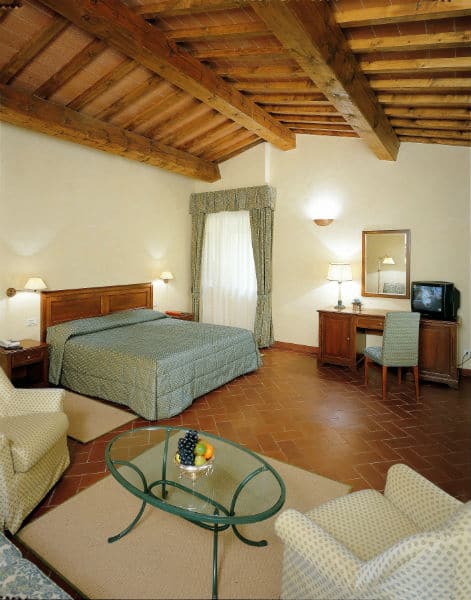
La Bagnaia Golf & Spa Resort, Siena, from £350 (≈ €415) (≈ $465) (≈ CA$655) (≈ AU$665) (≈ NZ$815) (≈ CHF 385) (≈ kr 4,395) (≈ kr 4,635) (≈ kr 3,105) pp for three nights. The inland choice, close to Siena, home to the Royal Golf La Bagnaia course. The better-value base and a good pick if you want the historic city within reach.
Argentario Golf Resort, Porto Ercole, from £610 (≈ €725) (≈ $815) (≈ CA$1,145) (≈ AU$1,155) (≈ NZ$1,435) (≈ CHF 665) (≈ kr 7,655) (≈ kr 8,075) (≈ kr 5,425) pp for three nights. The coastal choice on the Monte Argentario promontory, with its own Argentario Golf Club. The more expensive of the two, and the one to book if the sea setting is the point of the trip.
For a full week, many golfers split their stay across both to play each course.
Best time to play golf in Tuscany
Spring and autumn are the sweet spots. April into June, then September into October, usually give you warm, comfortable golfing weather without the peak of high summer.
July and August can be genuinely hot in central Italy, which suits some players and not others; if you go then, plan early tee times. Winter is quieter and cooler, with a real chance of rain, so it is the season to manage expectations rather than chase guaranteed golf.
A sense of Tuscany
History & heritage
Florence is where the Renaissance was paid for, and the evidence is still in the buildings: Brunelleschi's dome over the cathedral, the Uffizi, the David in the Accademia. Book the last two ahead or lose a morning to the queue. Siena is older in feeling and better preserved, a medieval city whose historic centre has been UNESCO-listed since 1995, and whose contrade still race the Palio round the Piazza del Campo on 2 July and 16 August, ten of the seventeen at a time. San Gimignano kept fourteen of its towers. Pienza was rebuilt in the 1400s as one pope's idea of a perfect town, and sits inside the Val d'Orcia, listed in its own right. Even the small places earn attention. Impruneta, on the edge of Chianti, fired the terracotta tiles for Florence's dome.
Food & wine
Tuscan cooking is frugal by design and better for it. Pappa al pomodoro and ribollita both exist to use up bread, which here comes unsalted; panzanella does the same job in summer. Order the bistecca alla fiorentina once, Chianina beef cut thick and grilled over wood, and know that one steak feeds two. Wild boar becomes ragu. Pici, the fat hand-rolled pasta of the Siena hills, takes it well. Pecorino from Pienza, cantucci dipped in vin santo, and you are done. Chianti Classico must be at least four-fifths Sangiovese and carries the black rooster on the label. Brunello di Montalcino and Vino Nobile di Montepulciano are the serious bottles, and Vernaccia gives San Gimignano a white worth ordering. Down on the Maremma coast it turns to Morellino di Scansano, at least 85 per cent Sangiovese and softer, with sea air in it.
Beyond the fairways
The drive is the thing here. Take the SR222, the Chiantigiana, south out of Florence and stop where you like: Greve in Chianti, Panzano, Radda, Gaiole, each with a cellar door and a butcher worth the detour. Further south the Val d'Orcia opens up, Montalcino and Pienza on the ridges. Around Scarperia, the Mugello has been forging blades for five centuries and the main street is still lined with knife shops. Buy a set of steak knives and you have solved several Christmases. On the coast, Porto Santo Stefano runs ferries to Giglio in about an hour, and the sulphur springs at Saturnia lie inland in the Maremma, free and open all year. The Cascate del Mulino are the ones people photograph.
Getting around & exploring
Fly to Florence, about two hours and twenty minutes from London, or Pisa if the fares suit better. Then hire a car, because there is no sensible alternative once you are past the city walls. The tolled Firenze-Siena link does Florence to Siena in an hour or so; the SR222 takes two, which is rather the point of it. Scarperia lies around 30 km north of Florence, in the Mugello. Porto Ercole is a different proposition. It sits 145 km up the coast from Rome Fiumicino, an hour and three quarters by road, and a long way from the Florence and Siena golf, so pick one base and stay put. One warning worth the ink. Italian towns ring their old centres with camera-enforced ZTL zones, and a wrong turn in Florence or Siena costs roughly 80 euros a gate, billed to you months later through the hire company.
Good to know before you book
Getting there
Most UK golfers fly in to one of the Tuscan or nearby airports and we arrange a private transfer to the resort from there. Both La Bagnaia and Argentario sit out in the countryside, so a transfer (or a hire car if you would rather explore independently) makes the most sense once you land.
Flights are an ATOL-protected add-on we can book alongside the trip rather than something baked into the holiday price, which keeps the ground arrangements and the flights clear and separate. Tell us your home airport and we will build the routing around it.
Good to know
The honest caveat is choice: Tuscany, for us, is essentially these two resorts and their two courses, so this is a region for a focused golf-and-Italy break rather than a tour hopping between many different clubs. The upside is that both courses are on site at their hotels, so you are never far from the first tee. The two resorts are an inland-versus-coast decision, the prices differ noticeably (La Bagnaia is the value pick, Argentario the pricier coastal one), and a private transfer is worth arranging given how rural both settings are.
★ 4.9 from real golfers · PTS Protected · ATOL for flights · Arranging golf since 1981
Frequently asked questions
Golf holidays in Tuscany. The questions our golfers ask most.
How do I get to Italy?
There are several regional airports, easily accessible from the UK, or you can enjoy a leisurely drive through France before settling in Northern Italy around Venice, Milan or The Lakes, to play great golf and enjoy Italian hospitality.
How much does a golf holiday in Italy cost?
Golf holidays in Italy start from £350 (≈ €415) (≈ $465) (≈ CA$655) (≈ AU$665) (≈ NZ$815) (≈ CHF 385) (≈ kr 4,395) (≈ kr 4,635) (≈ kr 3,105) pp with Golf Planet Holidays. That is a hand-built ground package, and the final price depends on your hotel, the courses you play and the season.
Is it easy to get around in Italy?
Hire a car or ask us to arrange private transfers. If you are staying at one of the excellent play and stay resorts, taxis may suit you best.
When is the best time to play golf in Italy?
Late spring and early autumn (May, June, September, October) avoid the summer heat, and the northern lakes are glorious in these shoulder seasons.
How do we know which area of Italy will suit us?
Give us a call and we'll discuss what holiday works for you.
How many golf courses are there in Italy?
We feature 23 courses and 19 resorts across Italy including Grand Hotel des Iles Borromees and Le Robinie Golf Resort. Your specialist matches the courses to your group's standard and budget.
Still have a question? Ask our golf travel team A free quote, no obligation, and no call centre.